Navigating Family Estrangement During the Holidays
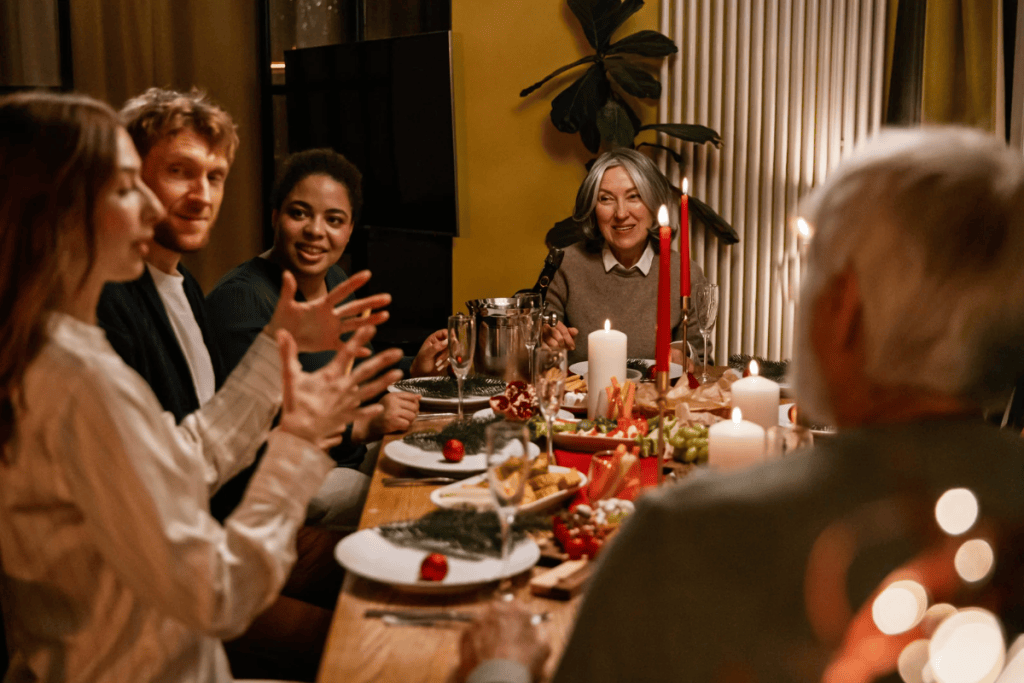
The holidays can be a challenging time for many as they navigate complicated family dynamics. For some, the holidays are a happy and exciting time when they get to relax with loved ones, reconnect, and foster more joy in their lives. However, for others, the holidays can be a painful reminder of the family dynamics they wish they had.
The majority of the clients that I work with either have complicated relationships with their parents or have gone completely no-contact with certain family members. For those who are no-contact, it can sometimes feel like you’re the only one navigating family estrangement during the holidays. In reality, research shared by the American Psychological Association suggests that about 27% of American adults are estranged from at least one family member. You are far from alone.
You may dread getting asked by your coworkers and friends what you are doing for the holidays. You may even find yourself rehearsing how you will respond to those questions to avoid having to explain your family dynamics or the fact that you may not know what you’re doing yet, and that’s okay.
Navigating family estrangement can bring up a painful mix of grief, relief, guilt, loneliness, and isolation. Let’s review why this time of year can be particularly challenging and some things you can do to prepare for this holiday season if you are estranged from your family.
If this season already feels heavy, you don’t have to carry it alone. Our San Diego-based practice offers virtual therapy throughout California, and you’re welcome to book a free 20-minute consultation whenever you feel ready.
Numbing out was how you survived. Healing is how you start living.
Trauma therapy helps you gently move through what you’ve been avoiding so you can feel present again. Learn more →
Why the Holidays Can Be So Painful When You’re Estranged From Your Family
The media portrays the holidays as the “happiest time of the year.” Lights go up, people get time off, the weather gets cooler, and there is an expectation of family closeness. The contrast between how you’re “supposed to” feel during the holidays and how you actually feel may lead you to feel like something is wrong with you, when that is absolutely not the case.
If you made the difficult decision to distance yourself from your family to protect your emotional well-being, there were likely painful experiences that led you to make that decision. You continue to deserve to feel safe and protected, so try not to lose sight of that.
However, that doesn’t change the fact that you might simultaneously mourn the family dynamics you wish you had while knowing that distance is necessary for your well-being. You may see other family dynamics around you and wish you had even an ounce of that same love and support.
For some, you may experience an urge to break no-contact or begin to question whether you are still making the right decision by remaining no-contact. While this is a decision only you can make based on your circumstances, I also want to encourage you to reflect on whether the family dynamics have actually changed or whether reconnecting could expose you to the same hurt or abuse you worked so hard to distance yourself from.
Sometimes, what we miss is not necessarily the relationship we had with our family members, but the relationship we always wished we could have with them.
Instead, let’s explore some healthy alternatives that can help you navigate this holiday season while continuing to prioritize the peace, love, and safety you deserve.
5 Ways to Cope With Family Estrangement During the Holidays
1. Know That It’s Okay to Feel Mixed Emotions
Family estrangement can bring up so many conflicting emotions, and that’s a completely normal part of the process. You may feel relief for not having to engage with people who don’t respect your boundaries or have been abusive toward you, while also mourning the fact that you never received the love and support you deserved.
You can grieve the loss of a relationship without wanting to return to it. You can also feel confident in your decision to go no-contact and still experience moments of sadness and loneliness.
Allowing yourself to hold space for all the conflicting emotions that come up may look like soothing your inner child by offering some calming and compassionate statements, such as:
- “You are safe now.”
- “I love you.”
- “You matter.”
- “How can I support you right now?”
- “You deserve to feel loved and supported.”
- “You had to do what you had to do to protect yourself, and that strength is admirable.”
Or anything else that comes to mind. Think about what the younger version of you may have needed to hear and give yourself permission to offer that love and reassurance now.
2. Be Intentional About How You Spend Your Time During the Holidays
Rather than waiting until the holidays are here, try to be intentional about planning how you would like to spend your time.
Keep yourself engaged in activities that you enjoy, or plan a vacation for yourself and others who are able to take the time off. I know many people who use this time of year as an opportunity to book travel and explore new places.
You can also take on a new project that you’ve been wanting to get done, plan some festive events with your chosen family, or simply use this time to rest and reconnect with yourself. And if you end up spending the holidays alone, that time can still feel restful and meaningful when it’s something you’ve chosen and planned for.
The goal isn’t to keep yourself so busy that you avoid your emotions, but rather to give yourself things to look forward to and create opportunities to experience joy.
3. Prepare Responses to Questions About Your Holiday Plans
Some of the most anxiety-provoking moments can be when coworkers, friends, or acquaintances ask what you are doing for the holidays.
Having some responses in mind and ready for those questions can help alleviate some of that anxiety.
Some examples of what you can say include:
- “I’m planning to spend some time with friends and loved ones.”
- “I’m taking advantage of the time off to do some traveling.”
- “I’m looking forward to having some downtime and relaxing.”
- “I’m still figuring out my plans, but I’m excited to have some time for myself.”
- “I’m not particularly close with my family, so I usually celebrate the holidays a little differently.”
There is absolutely nothing wrong with sharing that you are not close with your family, but you are also not obligated to disclose your family dynamics to others.
It’s all about what feels best and most genuine to you!
If these conversations stir up more anxiety than you’d like, therapy can be a gentle place to practice what feels true for you. We work with clients virtually across California, so you can get support from the comfort of home. Schedule a free 20-minute consultation to see if we’re a good fit.
4. Create Your Own Holiday Traditions
One of the opportunities that comes with spending the holidays differently is that you get to create traditions of your own.
Some people like to volunteer and give back to their community during the holidays, while others build unique traditions centered around things they genuinely enjoy doing.
So ask yourself, what do you genuinely enjoy doing? What would make the holidays feel special to you if you took away all the expectations of what they are supposed to look like?
Some ideas may include:
- Staying in, cooking your favorite dish, and watching your favorite movie.
- Hosting a holiday dinner with your chosen family.
- Spending time doing arts and crafts or engaging in a creative hobby.
- Renting a cabin up in the mountains.
- Volunteering for a cause that is meaningful to you.
- Taking an annual holiday trip somewhere new.
- Having a day dedicated to rest and self-care.
Give yourself permission to explore what you would like the holidays to look like moving forward. You don’t have to follow traditions that no longer serve you simply because they are familiar to you.
5. Protect Your Nervous System and Honor Your Boundaries
Lastly, honor your nervous system.
Family members may try to make you feel guilty for not attending certain events or pressure you to put your differences aside because it’s the holidays. However, if attending a family gathering means exposing yourself to abuse, manipulation, or disrespect, skipping the event is a valid act of self-preservation.
Pay attention to how your body responds when you think about interacting with certain family members. Do you notice yourself becoming anxious, tense, or emotionally overwhelmed? Do you feel like you have to mentally prepare yourself for what you might have to endure?
Give yourself permission to acknowledge those feelings and reflect on what boundaries you need to maintain to support your emotional well-being.
Just because it’s the holidays doesn’t mean the reasons you established those boundaries are no longer valid.
Give Yourself Permission to Experience the Holidays Differently
Navigating family estrangement during the holidays is not always easy. There may be moments when you feel empowered by the life you are creating for yourself and other moments when you wish things could have been different. There is room for both of those experiences.
Healing from painful family dynamics also involves learning how to create a life that feels fulfilling to you, even if it looks different from the life you once envisioned for yourself.
If the holidays look a little different for you this year, that’s okay. You are allowed to redefine what family means to you, build meaningful connections with others, and create new experiences that bring more joy into your life.
You deserve to experience love, peace, and connection, not just during the holidays, but throughout the entire year.
Finding Support While Navigating Family Estrangement
If you are struggling with family estrangement, unresolved childhood wounds, or feelings of guilt associated with setting boundaries with family members, therapy can provide a supportive space to process these experiences.
At Inward Healing Therapy, we help individuals heal from painful childhood experiences, navigate complicated family dynamics, and build healthier relationships with themselves and others.
We offer virtual therapy throughout California, so you can begin therapy for family estrangement from the comfort and privacy of your own home. If you’re interested in exploring how therapy can support you on your healing journey, we invite you to schedule a free 20-minute consultation.
Frequently Asked Questions (FAQs)
1. Is it normal to feel guilty about being estranged from my family during the holidays?
Yes. Guilt is one of the most common feelings that comes up, especially when everyone around you seems to be celebrating with family. Feeling guilty doesn’t mean you made the wrong decision. It often means you were taught to put other people’s needs ahead of your own safety.
2. Should I break no-contact with my family during the holidays?
Only you can make that decision. Before reaching out, ask yourself whether anything has actually changed, or whether the pull you feel is coming from the holidays themselves. It can help to talk it through with a therapist or someone you trust before you decide.
3. What do I say when people ask about my holiday plans?
You can keep it simple, like “I’m looking forward to some downtime” or “I’m celebrating with friends this year.” You don’t owe anyone an explanation about your family. Share only what feels comfortable and genuine to you.
4. How can I cope with spending the holidays alone after estrangement?
Plan ahead so the days don’t catch you off guard. Fill them with things you enjoy, reach out to your chosen family, and leave room for rest. If sadness comes up, let it be there. Grief and peace can exist at the same time.
5. Can therapy help with family estrangement?
Yes. Therapy gives you a safe space to work through grief, guilt, and childhood wounds, and to feel more confident in your boundaries. At Inward Healing Therapy, we offer virtual therapy throughout California, and you can book a free 20-minute consultation to get started.
Explore more insights